Oil & Gas
Safety-critical assets, maintained and on the record.
MaintenanceIQ is an industrial CMMS whose condition monitoring, inspections, calibration, permit to work and lockout records fit the safety-critical assets found in oil and gas operations. It helps your maintenance planner, your reliability engineer and your EHS head keep high-consequence work controlled and provable, starting with a pilot.
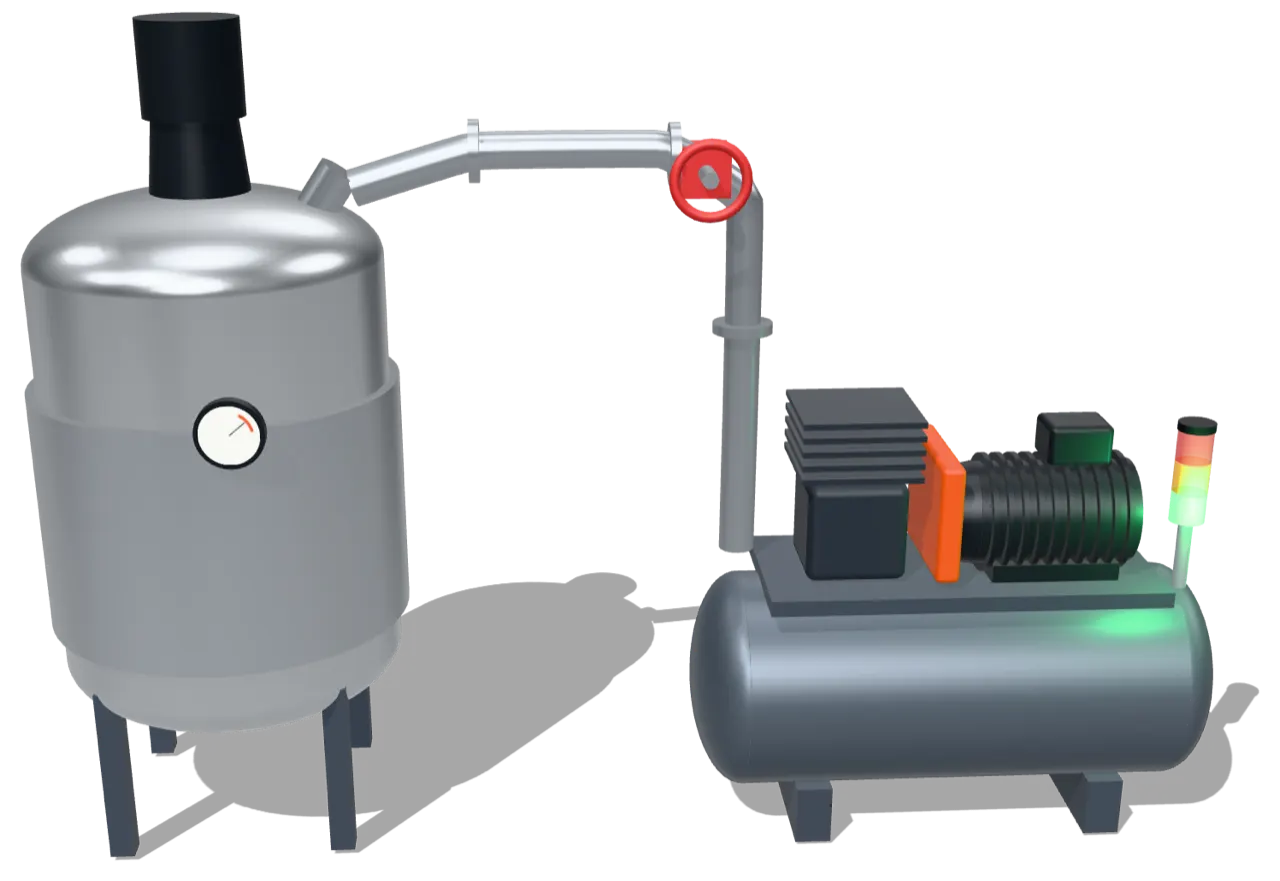
An illustrative day
A day at a processing site
06:00. Your planner opens the morning digest. A PM on a gas compressor (illustrative) is due today because it ran its hours, and a pressure gauge on the same skid is due for calibration this week. Both carry criticality A, so they sit at the top of the list.
09:30. Vibration readings on the compressor's drive end have been creeping up. They come in from the site's SCADA through the ingest API. MaintenanceIQ projects when the trend will reach its warning limit and alerts the planner while there is still time to plan a stop.
11:00. The repair needs the compressor isolated. A permit to work is raised with gas tests and the named crew. Each fitter puts a personal lock on the isolation. The isolation cannot be released while any lock is still on.
15:00. The job is done. The technician completes the checklist on a phone, adds photos and readings, and logs the parts used. The permit is handed back through its gated steps.
Later. When an inspector or an internal auditor asks for the record, the evidence pack already holds the PM history, calibration log, work orders and breakdown closures for that asset.
What ships today that matters for safety-critical assets
Condition monitoring
Set warning and critical limits per parameter. Readings arrive by hand, from a PLC, SCADA or IoT gateway through a token-secured ingest API, or by CSV and Excel import. Each reading is classified as it arrives, warnings alert the right people, and a critical reading can open a breakdown.
How: Licensed add-on
Learn moreInspections and checklists
Typed checklists with checkboxes, numbers, ranges, photos and file uploads, completed on a phone at the asset. Completed runs are frozen. The EHS module adds inspection templates of its own.
Learn moreCalibration
Schedules for an asset or a specific installed instrument, with recurrence, vendor tracking and uploaded PDF certificates. Upcoming and past calibrations show on the asset.
Learn morePermits to work
Permits record gas tests, the named crew and a gated handback, so high-risk work starts and ends properly.
How: EHS module
Learn moreLockout and tagout
Isolations carry personal locks, and the rule is no lock, no release. An isolation cannot be released while a lock is still on.
How: EHS module
Learn moreEvidence packs
A six-section evidence pack covering asset register, PM compliance, calibration log, work order history, breakdowns through to closure and checklist records. Each pack is frozen and can be signed.
Learn moreEarly warning on rotating equipment
Pumps, compressors, fans and their drives give warning before they fail, if someone is watching the trend. Condition monitoring puts every reading on the asset, checks it against your limits the moment it arrives, and shows a drift-to-limit projection of when the trend will cross.
Asset Risk (Beta) adds a risk score per asset: condition likelihood multiplied by criticality, with every factor linked to its evidence. It is predictive maintenance from your own data, no AI theatre. It can draft a preventive work order for your planner to accept or dismiss, and it alerts when an A or B criticality asset crosses a risk threshold.
- Warning and critical limits per parameter
- Drift-to-limit projection and stale sensor detection
- Asset Risk (Beta) with drafted preventive work orders
Control of work on the same record
The EHS module is licensed and switched on per site. It puts permits to work, lockout isolations, HIRA risk assessments, incidents and CAPA on the same platform as your work orders, with the same audit log on every write.
HIRA assessments compute the score, the risk band and whether the risk is acceptable, and record controls by the hierarchy of controls. CAPA actions carry an owner, a separate verifier and an effectiveness check. Chemicals carry their GHS classification and storage segregation, and a competency register tracks certificates and expiry.
- Permits to work with gas tests, named crew and gated handback
- LOTO with personal locks
- HIRA, incidents and CAPA with verifier separation of duties
- Competency, chemicals, PPE and emergency preparedness registers
Evidence you can hand over
High-consequence work gets questioned. Every write in MaintenanceIQ is in the audit log. A work order that is deleted is hidden from work views but kept in the evidence pack and the log, with a mandatory reason. Evidence packs are frozen as records that cannot be edited and are downloaded through short-lived signed links.
Packs can carry an optional electronic signature with the named signer, a timestamp and the meaning of the signature. MaintenanceIQ gives your auditor evidence. It does not certify your site or your assets.
How a pilot runs
- 01
Pick one unit
Choose the asset group where a failure costs the most, such as a compressor train or a pump set.
- 02
Prove it there
Load the assets, connect the readings you already have, set limits, and run PMs, calibration and permits on the record.
- 03
Decide together
Review what fitted and what did not. Extend across the site only if it earns its place.
Frequently asked questions
Is there an oil and gas version of MaintenanceIQ?
No. There is no oil and gas module or SKU. The shipped platform, with condition monitoring and the EHS module, fits many safety-critical asset needs, and we confirm the fit in a pilot.
Does it claim conformance with oil and gas industry standards?
No. It keeps maintenance, inspection, calibration and control-of-work records and assembles them into evidence. Conformance and certification are for your organization and your certification body.
Can it take readings from our SCADA system?
Yes. Readings can be pushed from a PLC, SCADA system or IoT gateway through a token-secured ingest API, imported from CSV or Excel, or entered by hand on a round.
Are permits to work and LOTO included in Core CMMS?
No. They are part of the EHS module, which is licensed and switched on per site.
Does the mobile app work in areas with poor signal?
The installable mobile app loads when the signal drops, but saving work needs a network connection. Plan rounds in dead zones with that in mind.